Dubai Leadership Councils: Where Islamic and SME banking go next
Senior leaders gathered around two tables in Dubai to debate what comes next for Islamic and SME banking, and found that the hardest questions are no longer about technology.
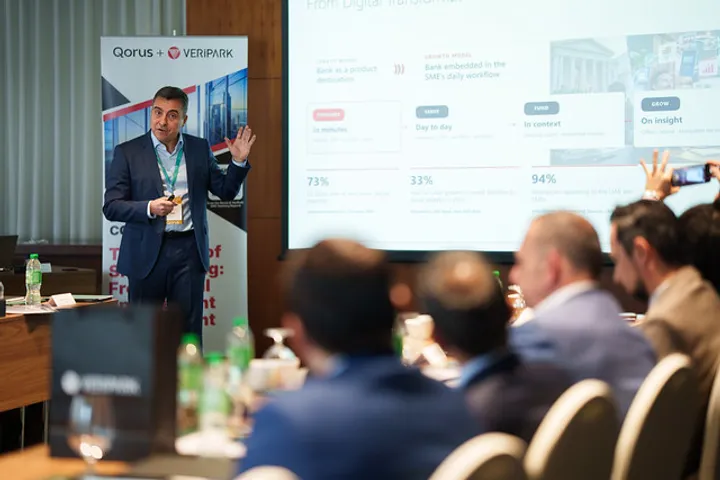
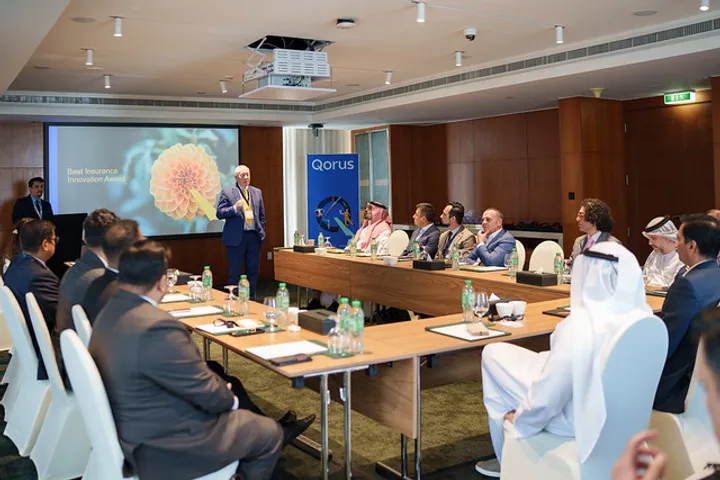
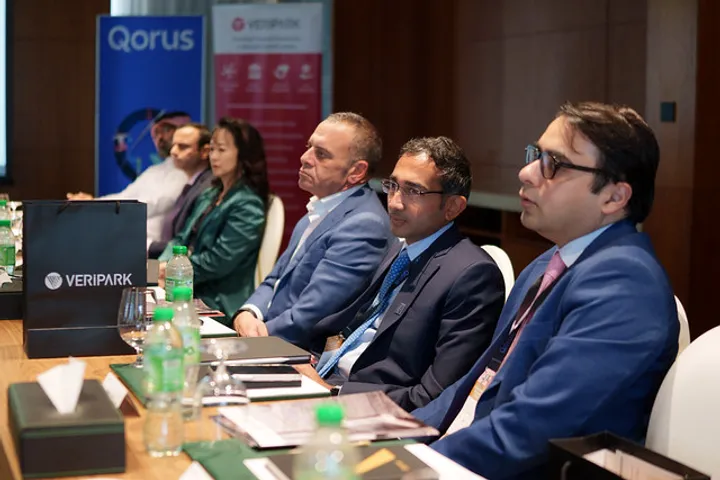
On 13 October, Qorus hosted not one but two Leadership Councils in Dubai. Our CEO John Berry and our Managing Director for Middle East & APAC, Zubair Ahmed, welcomed senior leaders for a morning on The Future of Islamic Banking: Accelerating Digital Transformation and an afternoon on The Future of SME Banking: From Digital Engagement to Intelligent Growth.
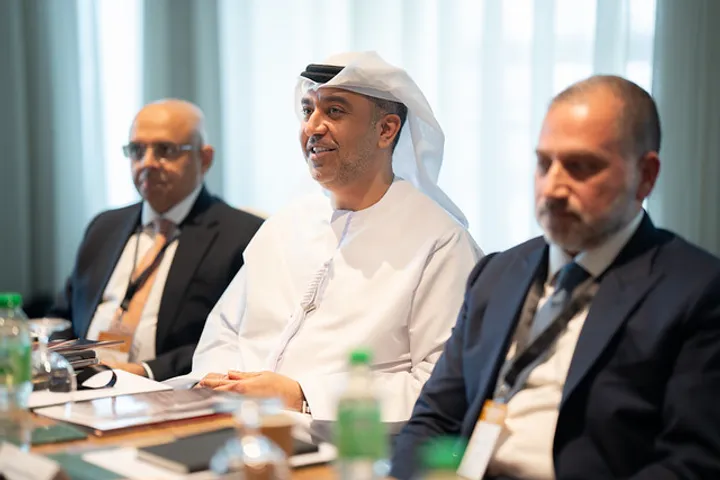
Around the tables were leaders from Standard Chartered, Emirates Islamic, Emirates NBD, Mashreq, Rakbank, Al Masraf, Sharjah Islamic Bank, Commercial Bank of Dubai, Jordan Ahli Bank, Afghanistan International Bank, Mauritius Commercial Bank, Al-Futtaim, Al Rajhi Takaful and Hexaware, joined by our partner VeriPark.
How the day went
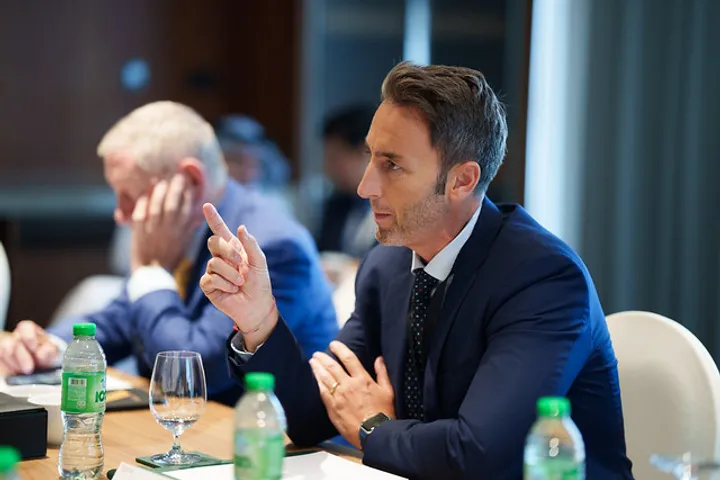
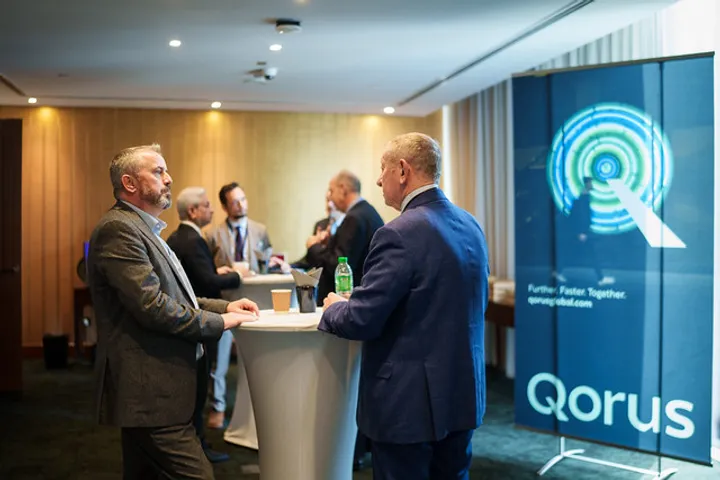
The format was simple: a few short provocations, then an open floor. The experience in the room ranged from markets where Islamic banking is just finding its feet to some of the region's most established players. That mix kept the debate honest. Several participants stayed for both sessions, and the two conversations kept crossing into each other's territory.
Islamic banking: from catching up to leading
For decades, Islamic finance has measured its progress by how quickly it could replicate conventional banking. The morning started with a bolder question: can it now set the pace instead? The room believed it can. Tokenisation and digital platforms are finally moving out of the sandbox, opening Islamic investments to a far wider pool of investors. Appetite for products that are genuinely well designed, rather than simply well labelled, is clearly there.
That ambition quickly ran into a more down-to-earth theme: trust. Participants agreed that the Sharia customer belongs to the bank. Fintechs and platforms can help serve that customer, but when something goes wrong, it is the bank that gets the call. Several voices warned against chasing the next headline while the basics, such as transparency, service and responsiveness, still fall short.
Compliance turned out to be one of the liveliest topics of the morning. It is rarely seen as glamorous, yet it is the foundation everything else rests on. The direction of travel was clear: digitise Sharia rules, checks and reporting so products reach the market faster and risks stop slipping through the cracks. Just as clear was the line nobody wanted to cross. Technology should support Sharia boards, not replace them.
AI ran through every part of the discussion, with a healthy dose of realism. Too many pilots never leave the lab. The banks seeing results are the ones using AI to help customers, equip their people and strengthen the institution at scale. The same customer-first logic shaped the conversation on ecosystems: simpler apps, open finance, journeys embedded in everyday life, and winning the next generation early.
The session closed on a human note. As AI takes on more of the work, leadership, judgement and emotional intelligence will matter more, not less.
SME banking: serving the missing middle
SMEs are the backbone of most economies. In some markets in the region they make up almost the entire economy. Yet banks have long treated them as too big for retail and too small for corporate. The afternoon set out to close that gap.
The conversation began with the idea of the bank as an operating platform for SMEs. Leading institutions now acquire, serve and grow business clients digitally, increasingly by embedding finance in the places where SMEs already buy and sell. Participants were equally clear about the limits. Smaller businesses can be served digitally from end to end, but larger, more complex clients still need a relationship manager who is equipped by AI rather than replaced by it.
That led naturally into the question of where SME banking belongs. As digitisation lowers the cost of serving small businesses, SME banking is moving closer to retail. The harder task is organisational. The customer is often both an individual and a business owner, and banks need to build around that person, not around their own org chart.
The discussion then widened from the bank to the whole system. Helping SMEs grow, the room agreed, takes more than better products. It takes banks and governments working together on ways to give the segment meaningful, lasting support.
The afternoon closed on what the AI revolution really means for SME banking. Four ideas framed it. The first is turning data into insight that SMEs themselves can use to understand and grow their business. The second is putting AI in the hands of relationship managers so they can serve clients better. The third is scaling AI from the back office to the front line. The fourth is a responsible mindset in which humans remain accountable for every model.
From there, the discussion turned to what this looks like for clients day to day. AI could make relationship banking richer rather than more distant. It could help banks speak to business owners in their own language, and connect every channel into one consistent conversation. The final word went to leadership. None of this happens by itself: it takes leaders willing to drive the change and bring their people along.
Celebrating the region's reinventors
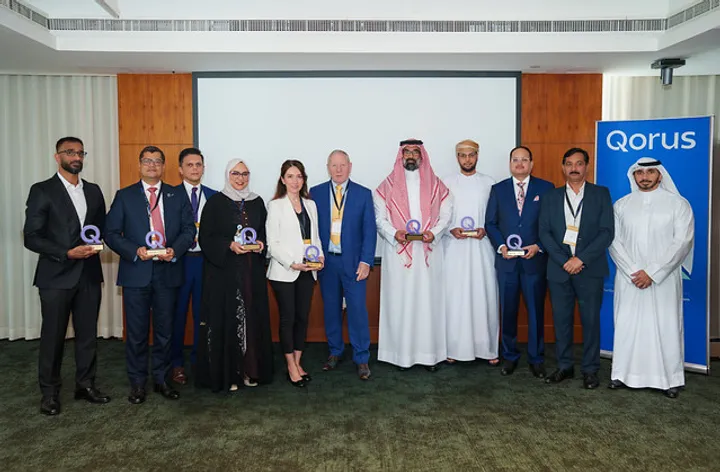
Between the two councils, both groups came together over lunch. More of the region's leading banks then joined us for the Qorus Reinvention Awards.
The awards exist for a simple reason. The best ideas in banking deserve to be seen, shared and copied. Each winning institution told the story of its innovation in a short film: the problem it set out to solve, the solution it built and the difference it has made for customers. These are not concepts or pilots. They are live innovations, recognised by peers around the world, that are already changing how people bank.
Congratulations to this year's winners from the region: Citi, Emirates NBD, ADIB, e& money, Al Rajhi Takaful, Bank Muscat, First Abu Dhabi Bank and Zand. Coming in the middle of a day spent debating what the future of banking should look like, the ceremony was a reminder that much of it is already being built in this region. Your work is setting the pace for the industry.
Thank you
A heartfelt thank you to everyone who joined us and shared their experience so generously. Conversations like these are what make our community so valuable, and we look forward to continuing them.
Leverage community expertise to redefine finance
Our communities cover diverse topics such as digital transformation, SME finance, or Embedded insurance, providing a platform to learn from industry experts and peers.