At work with Francisco Maroto
Francisco Maroto, Head of Blockchain and Digital Assets at Spanish bank BBVA, served as one of the distinguished jury members for the Qorus-Infosys Finacle Banking Innovation Awards 2025. Drawing on his extensive experience at BBVA, he highlights the importance of maintaining a healthy work-life balance—whether through quality time with family, eating well, or staying active through sports.
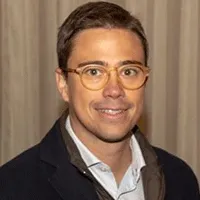
Francisco Maroto, Head of Blockchain and Digital Assets at Spanish bank BBVA, served as one of the distinguished jury members for the Qorus-Infosys Finacle Banking Innovation Awards 2025. Drawing on his extensive experience at BBVA, he highlights the importance of maintaining a healthy work-life balance—whether through quality time with family, eating well, or staying active through sports.
Please tell us a little bit about your background.
I have been working at BBVA for more than 20 years in different roles in IT, Operations and Business related with international banking operations, payments, and Swift. This experience has given me a good understanding of how traditional banking rails work and enabled me to lead the new banking rails efforts in BBVA. During the last eight years I have been leading blockchain and digital assets efforts, defining the global Digital Asset Strategy and executing it through all the projects we have launched in different geographies of our footprint. We have been the first "TradFi" bank to launch crypto custody and trading services in Spain and Turkey, and prior to that we were one of the first to launch such services in Switzerland as well. We aim to provide access and enable our customers to take advantage of the opportunities brought by the new tokenized digital economy or web3.
Outside my workplace I am a father of two, a 10-year-old boy and an 8-year-old girl. I love spending time with them and with my friends and family. When I have the opportunity, I like going out for tapas and enjoying the fantastic gastronomy and "terrazas" here in Spain.
What does your workplace look like?
I work at Ciudad BBVA, the main headquarters of BBVA Group in Madrid. It is a very nice complex, with open space, and a lot of light everywhere. The complex is composed of seven low-rise buildings and a 93-meter tower known as "La Vela."
Ciudad BBVA was designed with a focus on sustainability and efficiency. The campus is designed with features like LED lighting, rainwater collection, and solar panels, which contribute to significant energy and water savings. Additionally, its open office plan and design, by architects Herzog & de Meuron, are intended to foster collaboration and innovation among employees, aligning with the bank's digital transformation strategy.
Could you describe your usual working day?
After leaving the kids at school, I go to the office and start with the daily routine, mainly meetings with different areas of the bank, startups, regulators, or any other key internal or external stakeholders. At lunchtime I try to go to the gym to practice boxing or running, eat a salad at my desk, and continue until I have to go and collect my kids from their afterschool activities. I help with the homework, have dinner, and watch a series or movie once the kids go to bed.
What is your favorite food?
I love food from all around the world, especially Mediterranean (Spanish, Greek, Italian, Turkish, Moroccan...) and Asian food, mainly Japanese and Thai. If I had to choose, jamon iberico, paella, or a good T-Bone on the barbecue would be top of the list.
What do you do when you need a break from work?
Go to box or run. When boxing, you do not have time to think, other than hitting or dodging, so it is great to disconnect. On the other hand, running gives you time to think and maybe find solutions to the problems you have in your head at that point of time.
What is the key to building a successful team?
I think that the first part would be creating a healthy and happy work environment. We spend a lot of time working with our team members and we must be happy and enjoy this time together, otherwise life would be grey and there will not be trust and engagement within the team. The second would be creating a diverse team with different backgrounds and points of view that enable the team to cover all the different angles and as many different options as possible.
There is a saying that we learn more from failure than success. Tell me about one of your failures and what you have learned from it.
During one of the projects, we were willing to work with a white-label solution in order to be able to go to market faster—but we saw that many of the companies offering the service were very young and with limited resources, and some of them started to go belly up. So we had to change the strategy and develop by ourselves to reduce counterparty risk. The fastest path is not always the best to achieve the target.
What advice would you give to someone who wants to succeed in financial services?
Be flexible and open-minded, open to change, and willing to challenge the status quo. Financial services are transforming and this mindset is a must in any company working in this industry.
Read more of these interviews - Learn from the best!
Innovation Awards Hub community
With Qorus memberships, you gain access to exclusive innovation best practices and tailored matchmaking opportunities with executives who share your challenges.