Innovation Spotlight: Where banks can truly add value in the car journey
In this guest perspective, Patrice Bernard, author of the French fintech and banking innovation blog C'est pas mon idée, explores how financial institutions are rethinking their role in the car ownership journey.

In this guest perspective, Patrice Bernard, author of the French fintech and banking innovation blog C'est pas mon idée, explores how financial institutions are rethinking their role in the car ownership journey. Rather than trying to become automotive marketplaces, a new generation of initiatives is focused on solving specific customer pain points before and after the purchase.
He examines three examples: Cetelem's AutoCheck platform, which helps consumers understand the true cost of owning a used vehicle; DriveScore's model linking safe driving behavior to lower auto loan costs; and Lloyds Banking Group's vehicle management tool, designed to simplify the administrative burden of car ownership. Together, these projects highlight both the opportunities and limitations of banks' expanding ambitions beyond traditional financial services.
Cetelem expands its role in the car-buying journey
As the wave of online sales portals launched by banks—including platforms for vehicle purchases—appears to be losing momentum, BNP Paribas Personal Finance (Cetelem) is testing a different approach to integrating complementary services into its core business. Rather than trying to own the purchasing journey itself, the company is focusing on a more natural extension of its expertise: helping consumers understand the total cost of vehicle ownership.
In an initial pilot phase, the company has launched AutoCheck by Cetelem in Portugal, targeting consumers looking to purchase a used vehicle. The platform complements Cetelem’s traditional loan simulation tools with a broader view of the costs associated with owning a car. The goal is to give prospective buyers a more complete financial picture so they can make better-informed decisions.
Users begin by selecting a vehicle model from the platform’s database, either to gather information or compare options. Beyond financing costs, AutoCheck provides estimates of registration fees, taxes—including those linked to CO2 emissions—fuel expenses, and insurance premiums. Insurance estimates can be refined further based on individual circumstances. Together, these elements offer consumers a quick overview of both the upfront costs and the expected monthly budget required to own the vehicle.
The platform’s most distinctive feature, however, focuses on vehicle reliability. Drawing on data from Icare, another BNP Paribas subsidiary specializing in maintenance contracts and mechanical breakdown warranties, AutoCheck can provide insights into maintenance expenses, repair frequency, and average repair costs when relevant data is available. These estimates are incorporated into the broader ownership cost calculation, giving consumers greater visibility into potential future expenses that are often overlooked during the purchasing process.
At its current stage, AutoCheck appears to be very much a minimum viable product (MVP). Several features seem unfinished, leaving room for future enhancements that could improve both usability and accuracy. Potential additions might include integrated financing scenarios within the cost summary, automatic retrieval of used-car market values rather than requiring manual entry, or fuel cost calculations tailored to a driver's expected annual mileage.
Beyond the tool itself, the initiative may signal a welcome evolution in how financial institutions approach non-banking services. Rather than attempting to control customer journeys where banks are not naturally perceived as trusted intermediaries, BNP Paribas Personal Finance is leveraging its financial expertise to help consumers understand the economic implications of a major purchase.
By stepping back and focusing on the broader financial impact of vehicle ownership, the company is addressing a genuine consumer need that remains largely underserved. In doing so, it may be demonstrating a more sustainable and credible model for extending banking services beyond traditional products.

Lower-cost auto loans reward safer drivers
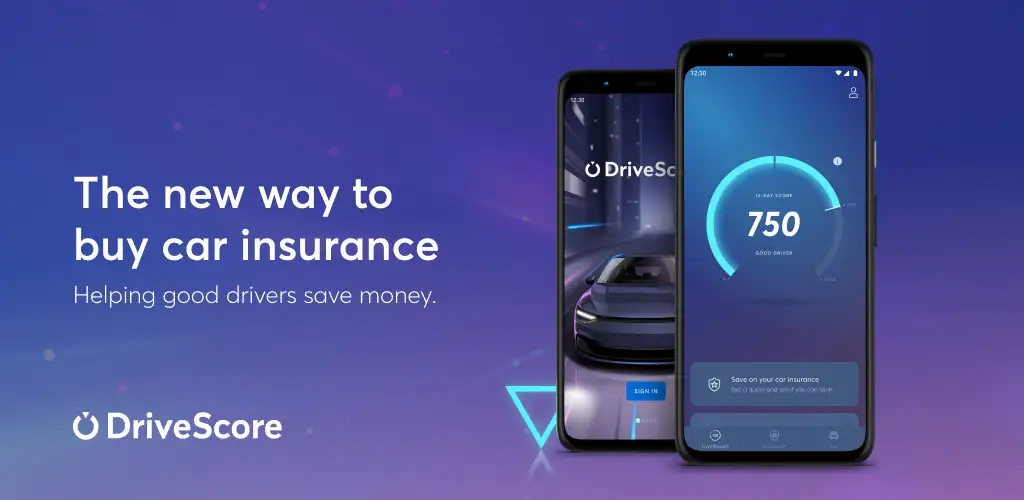
UK-based DriveScore has built its business around a simple premise: drivers who demonstrate safe driving habits through the company's mobile app can access more favorable insurance premiums from participating insurers. The company is now extending that concept into consumer lending, offering borrowers the opportunity to reduce the cost of their auto loans.
The process remains largely unchanged. DriveScore's app monitors driving behavior—including speed, acceleration, braking patterns, and cornering—and uses that data to generate a score ranging from 0 to 1,000. Drivers who achieve a score of at least 750 are considered low-risk. If they choose to share their score with participating lenders, they may qualify for a discount on a car loan.
According to company executives, the incentive is not simply a marketing tactic. DriveScore says it is based on analysis of the large volume of behavioral data it has collected since launch. The company's research reportedly found a correlation between responsible driving habits and a greater likelihood of meeting financial obligations on time, including credit card payments and loan repayments. That said, the financial benefit remains relatively modest, with savings capped at £170.
The initiative is possible in large part because DriveScore is part of the ClearScore group. ClearScore originally built its business around the use of alternative data—much of it derived from open banking—to create credit assessment models that are intended to be more inclusive, accurate, and accessible than traditional scoring methods. Having expanded into new categories of consumer data for adjacent use cases, the company is now bringing those capabilities back into the lending arena.
While the concept is innovative, it also raises important questions. A statistical correlation between driving behavior and financial responsibility does not necessarily imply a direct causal relationship. Without stronger evidence of causation, some may view the link as insufficient justification for using driving data in lending decisions.
However, if the underlying relationship proves robust, the model offers an intriguing example of how banking and insurance interests may increasingly converge. For insurers, safer drivers generally mean lower claims costs. For lenders, financially responsible borrowers represent lower credit risk. The participation of major insurer Admiral in the program may suggest that industry players see meaningful value in this intersection.
More broadly, the initiative highlights the growing role of alternative behavioral data in financial services. As institutions continue to search for new ways to assess risk and personalize products, models that bridge traditionally separate sectors such as insurance and lending could become an increasingly important area of innovation.
Managing your car through a banking app?
After a wave of ecosystem-building initiatives that often fell short of expectations, banks have become more selective about expanding beyond their traditional core businesses. Rather than attempting to own entire customer journeys, many are now targeting narrower, more specific use cases. Lloyds Banking Group's new vehicle management tool is one example of this shift.
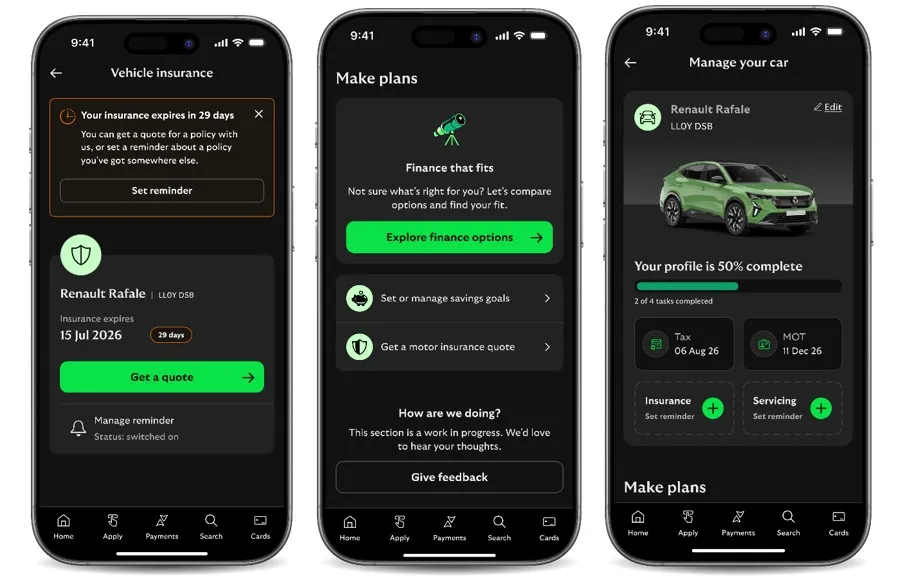
Integrated into the bank's mobile app, the service is designed to simplify the administrative tasks that come with vehicle ownership. Customers simply enter their vehicle registration number and gain access to key vehicle information, along with automated reminders for important deadlines such as vehicle inspections, tax payments, and insurance renewals.
The feature is rooted in a real consumer pain point. Research commissioned by Lloyds found that many drivers struggle to keep track of these obligations and can face significant consequences when they miss them. More than one in five UK motorists reported having forgotten at least one important vehicle-related task, with 11% of those individuals incurring additional costs, often in the form of fines. In some cases, missed deadlines can even lead to a vehicle being taken off the road. Even for drivers who remain compliant, managing these requirements is often viewed as a frustrating administrative burden.
From Lloyds' perspective, helping customers avoid these unnecessary expenses creates a natural extension of its role in supporting financial well-being. At the same time, the service presents opportunities to offer relevant products at key moments. Insurance is an obvious example: because the bank has access to vehicle data and renewal timelines, it can proactively prepare and present insurance quotes before existing policies expire. Financing and refinancing offers can also be introduced when appropriate.
While the concept is legitimate and addresses a genuine customer need, the execution appears somewhat limited.
A key weakness is the lack of actionable support. The app sends reminders, but does not appear to guide users through the next step. If the objective is to simplify vehicle ownership, why not allow customers to pay taxes directly, schedule inspections, or initiate renewals from within the experience? Notifications alone reduce the risk of forgetting, but they do not eliminate the friction associated with completing the task.
This limitation becomes even more apparent given the competitive landscape. UK consumers already have access to dedicated vehicle management platforms, such as Caura, that offer far more comprehensive functionality. Lloyds' approach reflects a recurring challenge in financial services: assuming that simply embedding a feature inside a banking app creates value, even when comparable standalone solutions provide a superior experience.
More broadly, the initiative raises questions about priorities. Lloyds is effectively experimenting with a form of proactive advice—albeit in a narrow and imperfect form—focused on vehicle ownership. Yet many customers would argue that this type of proactive guidance is even more important when it comes to managing their personal finances, an area much closer to the bank's core expertise.
As banks continue to explore opportunities beyond traditional banking products, success may depend less on adding new features and more on delivering meaningful value that customers cannot easily find elsewhere. In that respect, vehicle management services have potential, but only if they move beyond reminders and become genuinely useful tools that help users take action.
Mobility community
With Qorus memberships, you gain access to exclusive innovation best practices and tailored matchmaking opportunities with executives who share your challenges.