From imitation to integrity: Why trust, not technology, will shape Islamic banking's next chapter
Islamic banks finally have the tools to lead rather than follow, but industry leaders warn that credibility, not technology, will decide the outcome. Drawing on a Qorus roundtable in the UAE, this article examines product imitation, Sharia governance and where AI can genuinely make a difference.
For most of its modern history, Islamic banking has been a fast follower, taking products launched by conventional banks and re-engineering them to comply with Sharia principles. Tokenization, AI and open finance now offer a chance to lead. Yet at a Qorus Islamic Finance Community roundtable in the UAE, senior bankers from Standard Chartered, Al Masraf, Emirates Islamic, Jordan Ahli Bank, Afghanistan International Bank (AIB), Takaful Emarat and Al-Futtaim Finance kept returning to a harder question. Islamic banking's real asset is the credibility of its Sharia promise. Is the industry building on it, or quietly eroding it?
Their answer was uncomfortable. That credibility is being tested by product concentration, contested structures and governance that still runs on paper, and new technology creates value only if it fixes those first.
Growth is not the only measure of success
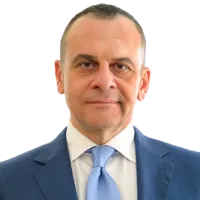
The IFSB put global Islamic finance assets at $3.88 trillion at the end of 2024, up almost 15% in a year. For Moataz Khalil, Chief Wholesale Banking Officer at Al Masraf, that figure tells only part of the story. “The growth of Islamic finance has been impressive, but growth alone should not be the ultimate measure of success,” he said. “While a significant portion of industry activity is concentrated in a limited number of widely accepted structures, including Wakala-based transactions and sukuk, the next stage of the industry’s evolution should focus on greater product diversity and innovation. Standardization has supported scale and market acceptance, but long-term sustainability will also depend on expanding the range of Sharia-compliant solutions available to clients. Variations in Sharia interpretation across jurisdictions naturally encourage preference for established structures, making industry-wide collaboration and innovation even more important.”
Authenticity is a commercial asset
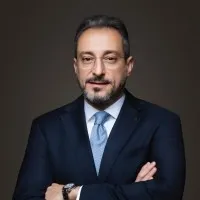
Several participants argued that the deeper weakness is imitation. "Industry mainly is competing with conventional banking which has been around for years, hence a lot of copy / paste has happened in the past in order to stay relevant to consumers demanding the same products & services," said Hisham Hammoud, a board member of Takaful Emarat and former bank CEO. "We just translate the product name with minimal changes to offer what competes with conventional offerings." Profit-and-loss sharing structures such as mudaraba, he argued, get far less attention than crypto or stablecoins.
Ahmad Abu Eideh, CEO of Jordan Ahli Bank, highlighted the importance of meeting customer needs within the boundaries of Sharia. “We need to give proper Sharia-compliant products,” he said. “If it’s possible to give it to them, good. If it’s not, and it’s not within the domain of Sharia-compliant, we don’t.”
The same test surfaced on digital assets. Moataz argued that crypto returns depend on speculation over value itself, which sits uneasily with Islamic principles, while stablecoins backed by real value are easier to reconcile. Ahmad raised the question of what gives digital currencies their underlying value. Zubair Ahmed of Qorus, who moderated the discussion, cautioned that early innovative ideas or intentions can sometimes look misguided or flawed before they mature through further iterations.
Sharia governance still runs on paper
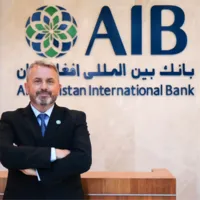
If authenticity is the asset, governance protects it, and Stewart Lockie, CEO of AIB, gave the most candid account of where that breaks down. AIB has just completed its conversion in a market new to Sharia compliant banking. About a third of his staff work in compliance across three core banking systems, and auditors switch between Hanafi interpretations and AAOIFI standards.
Looking forward, Stewart plans to map products and fatwas into a digital rules library, embed checks in the core system and surface exceptions on dashboards. "We'll never automate the Sharia board, I don't think," he said. "But we need to be able to give them the framework to actually speed up their processes and make their decisions."
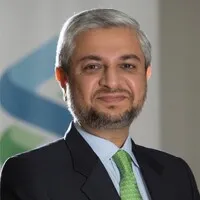
Zubair Ahmed cited Kuwait Finance House, which placed Sharia guidance inside its agile product squads so products are designed compliant rather than reviewed afterwards. Ali Allawala, who leads Islamic banking in the UAE and global Islamic wealth and retail at Standard Chartered, stressed a strong in-house Sharia team working with business leaders who understand the regulation. “Shariah and Business must collaborate and not work in silos. The business leaders should have a good understanding of regulations to decide what matters need to go to the Shariah Committee”.
Asked what to prioritize (liquidity and hedging, digitized asset trails, or a machine-readable Sharia library), participants split by market maturity. Pamela Chan King Yeun of Mauritius Commercial Bank and Halil Ozcan, Head of Digital Business for Al-Futtaim's financial services, chose asset trails, with Halil citing the difficulty of tracking collateral in asset-backed finance. Stewart chose the library for Afghanistan but liquidity tools if he were in the UAE. David Horton, Qatar General Manager at Hexaware, argued that the library unlocks everything else, because the unglamorous groundwork has to come before the exciting use cases. Zubair’s view was that all three needs to be addressed in parallel, as there are intrinsic interdependencies among them all.
AI's real test is the most complex part of the journey
The discussion made clear that customers expect more than paper processes moved into an app. Simple requests increasingly run straight through, but the real test lies in more complex products such as home, auto and personal finance, where Islamic banking has historically taken longer than conventional banking. In a Murabaha contract, the bank must buy and own the asset before selling it to the customer, and each step needs to be taken in the right order & sequence. Zubair Ahmed was clear that this is structural, not a flaw to be engineered away: “Islamic finance processes are seen as additional paperwork because of the to and fro trading nature of our business. That is an underlying element which will not change.” What can change is how quickly and smoothly that sequence runs, and that is where AI and automation can make the greatest difference.
Halil said fragmented customer data slows everything, and that the bottleneck often sits outside the bank, where government digital-identity infrastructure lags the banks. David warned that loading unvetted documents into a model produces an ambiguous Sharia knowledge base rather than a reliable one. Omar Haddad, Managing Director & CEO at Al-Futtaim, argued for partnership: "If you want to go compete with banks instead of collaborating with banks, it's not the right approach." Younger customers, he added, show little brand loyalty and choose on convenience and benefit. Yet when something goes wrong, participants noted, customers complain to the bank, which carries the Sharia accountability whatever its partners do.
Stewart raised a caution about what automation does to people, warning that the drive for AI risks eroding emotional intelligence, and that bankers who never learn by making mistakes may struggle to lead. John Berry, CEO of Qorus, added that most customer decisions are emotional, and banks that lose that connection lose the relationship.
The tools to digitize compliance, tokenize sukuk and automate complex financing now exist. Whether Islamic banks use them to make the Sharia promise easier to keep, or simply to copy conventional banking faster, will decide whether the industry finally leads.
Council Participants

Speaking Institutions
Islamic Finance community
With Qorus memberships, you gain access to exclusive innovation best practices and tailored matchmaking opportunities with executives who share your challenges.