At work with Iwan Juwono
Iwan Juwono is Head of Insurance at Grab, Southeast Asia’s leading superapp. He shares with Qorus’ Boris Plantier some glimpses of his daily life and his international experience gained in the insurance sector.
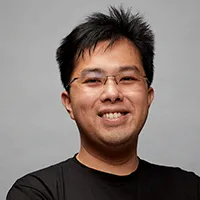
Iwan Juwono is Head of Insurance at Grab, Southeast Asia’s leading superapp. He shares with Qorus’ Boris Plantier some glimpses of his daily life and his international experience gained in the insurance sector.
Please tell us a little bit about your background.
I was born in Indonesia, but became a naturalized Australian citizen after spending most of my youth growing up in Sydney, Australia. My career is about to hit 20 years, and I’ve been blessed with the opportunity to work across many countries – Australia, UK, and South-East Asia.
My core professional identity is that of an actuary, and I enjoyed that career throughout my time at firms such as Mercer, KPMG, Milliman, and eventually at (re)insurers Allianz and SCOR. Despite not doing actuarial work now for at least five years, I still consider myself an actuary at heart. In 2020, I joined the new insurtech business of Grab, the NASDAQ listed super-app, and eventually took over leadership of that unit in 2022.
It’s been a wonderful journey watching the insurtech business, GrabInsure, grow from a very small experimental unit to becoming a respectable business vertical operating in six markets, thanks to the hard work and brilliance of the team and the support of our insurance partners. We took another major step forward in 2025 by becoming a full stack insurtech, obtaining our general insurance license in Singapore.
We still have a long road ahead to become a major contributor to the group’s mission of economic empowerment, but that long challenge is one to look forward to.
What does your workplace look like?
I sit with my team in an open seating area with comfortable chairs and two monitors on each desk. It’s cozy but we like it since there’s a lot of good impromptu discussions between different departments and comfortable banter. On my table is a custom mechanical keyboard that I put together myself, an ergonomic mouse, a hot cup of tea, and that’s pretty much it.
Could you describe your usual working day?
A good morning ritual that I try to do to keep on top of the chaos is to reflect on what has been done so far in the week/month, examine my day/week ahead, and make a priority list. I use a variant of the Eisenhower Matrix as a simple framework – I tried to adopt GTD or Bullet Journalling but found them a bit too complex for my circumstances.
The day is usually spent in meetings – with our problem space teams (akin to agile squads), our country teams, insurance partners, and other business units in the Grab world. The most interesting sessions that I look forward to are listening to the great ideas and concepts that the team have come up with, and giving small feedback wherever I can. Their creativity never ceases to amaze me.
What is your favorite food?
I have a special love for pizza, even from a very young age. Neapolitan, New York, Romana, Sicilian, New Haven, Deep Dish, even the fast food ones, I love them all.
What do you do when you need a break from work?
My wife and I have been blessed with a young child recently, so the majority of my time outside of work is spent with my family. Where there is spare time from the baby, I have been trying to get into pickleball, joining Grab’s own employee club and also participating in our local community’s group.
What is the key to building a successful team?
I’m probably not the most qualified person to answer this question since there’s still so much for me to learn – I’ve been blessed to be surrounded by kind, responsible, motivated and talented people for most of my career. That makes it easier to build a strong team.
If I had to give one suggestion, it would be through a (badly) paraphrased Chinese proverb – “Don’t employ the questionable, don’t question the employed.” Basically, don’t employ those that are unreliable or dishonest, and trust and empower those that you do employ.
I’ve learnt the consequences of not following this principle through bitter experience, while also reaping unexpected benefits while following it. For example, there are a lot of talented individuals in the team that I would have never known about if I didn’t just trust in the team to lead the problem-solving process. Now they are thriving, and I feel a small twinge of accomplishment seeing them take on more responsibilities over the years.
There is a saying that we learn more from failure than success. Tell me about one of your failures and what you have learned from it.
A common refrain in tech is to fail fast, and fail often – but we’ve had many ‘big bet’ experiments that haven’t delivered success, and a typical post-mortem was usually a combination of poor product-market fit and/or execution failures.
Poor product-market fit can be forgiven so long as the proper research was done with the right amount of honesty and thought, but execution failures kill a team’s productivity and morale. It’s okay for experiments to fail, but it’s not okay if experiments fail because we or our partners did not execute properly. We have to be ruthless with our team’s time and attention, and cut non-performing experiments faster.
What advice would you give to someone who wants to succeed in financial services?
There’s many paths to and definitions of success. Setting aside the typical (good) advice of being hard working, efficient, agile, humble, etc., the normal advice that I give to would-be financial services professionals is, bluntly, to know your stuff. Financial services is both a relationship and technical business – and too often people ignore the latter.
I’ve seen too many people try to coast by and get leadership or management positions through their ‘polish’ or ‘management skills’ without having a solid foundation of knowledge or understanding in their area of financial services. That might work a couple of times, but eventually your career will stall.
Invest time in understanding your industry’s unit economics, its key components and drivers, the value chain, the key capabilities, technologies, players, and how it all comes together for your firm or company.
Read more of these interviews - Learn from the best!
Insurance & Embedded Insurance community
With Qorus memberships, you gain access to exclusive innovation best practices and tailored matchmaking opportunities with executives who share your challenges.