Islamic banks use digital tools to boost compliance and build customer trust
Authenticating Sharia-compliant products has long been a challenge for Islamic banks. Compliance has traditionally been a back-office function performed by Sharia scholars who reviewed and audited an institution’s products.
Advances in digital technology are enabling Islamic banks to build trust with their customers by making Sharia compliance clearer and easier to verify.
Authenticating Sharia-compliant products has long been a challenge for Islamic banks. Compliance has traditionally been a back-office function performed by Sharia scholars who reviewed and audited an institution’s products. Many of those products were adapted from conventional banking offerings. Customers were often unable to see how their products were authenticated. They were frequently wary of new offerings that might cause them to unwittingly transgress Sharia regulations.
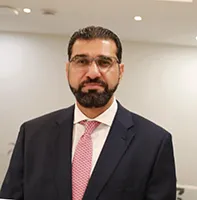
Authenticity is the primary concern for banks offering Sharia-compliant products, notes Abdul Haadhee Hussain, head of Sharia compliance and governance at the Bank of Maldives.
When banks can demonstrate authenticity by using digital technology such as AI and blockchain to perform Sharia audits and reviews, it makes customers more comfortable, says Hussain. It also makes banks’ Sharia committees and management more comfortable, he adds.
Hussain was speaking at an online event hosted by the Qorus Islamic Finance Community. The event examined how Islamic financial services institutions are using digital technology to scale innovation while maintaining ethical compliance. Other speakers included representatives from Bank Nizwa in Oman, Al Masraf in the UAE, Al Baraka Bank Pakistan, and CIMB Islamic in Malaysia.
Key takeaways
- Islamic banks are just starting to use digital technology to develop Sharia-compliant products.
- Complexity of regulatory and Sharia compliance is one of the biggest barriers to scaling Islamic banking offerings.
- Digital technology is making Sharia compliance easier to demonstrate and verify.
- Innovative Islamic banks are shifting Sharia audits from periodic reviews to real time validation.
- Leading Islamic banks are using digital technology to move away from mimicking conventional banking products and to develop fully Sharia-compliant offerings.
- Financial inclusion provides opportunities for commercial products as well as charitable initiatives.
Islamic banks are just beginning to use digital technology to develop Sharia-compliant products. Among the executives polled at the event, 54% said Islamic finance was in the early stages of maturity. A further 38% believed it was progressing towards maturity as shown by the variety of pilot projects. Only 8% thought Islamic finance was matching the digital maturity of conventional financial services firms.
More than a third of the executives at the event pointed to the complexity of regulatory and Sharia compliance as the biggest barrier to scaling Islamic banking. A similar proportion identified technology and data limitations as the main obstacle.
Although Islamic banks are only starting to use digital technology to build offerings that are fully Sharia-compliant, rather than adapted from conventional banking products, plenty of innovations are already coming to market.
Banking representatives at the Qorus event described five ways digital technology is turning compliance from back-office assurance to visible proof.
1. Digital Sharia compliance
Innovative Islamic banks are implementing digital controls and shifting Sharia audits from periodic reviews to real time validation. Compliance is becoming easier to demonstrate and verify.
Digital technology is not replacing ijtihad or Sharia scholars, says Hussain at the Bank of Maldives. Instead, it allows banks to scale their Sharia-compliant offerings and ensure they remain within halal boundaries.
Use case: Maybank Islamic in Malaysia has introduced a Zakat Auto-Debit facility that can automatically calculate and deduct zakat (tithes) from customers’ Islamic savings and investment accounts. Available on the bank’s app or website, the Zakat Auto-Debit facility uses precise Faraid algorithms and state-specific rates, digitally generates a full Akad contract each payment, and consolidates all records into a single statement while routing funds to official Zakat boards.
2. Smart Sharia products
Leading Islamic banks are using digital technology to move away from mimicking conventional banking products and instead offer customers Sharia-compliant products that incorporate profit-sharing and equity participation.
“Models based on AI-driven engines could assess venture viability in real time and allow banks to act as true partners rather than just lenders,” says Moataz Khalil, Chief Wholesale Banking Officer at Al Masraf in the UAE. “This would align with Islamic concepts and move away from mimicking conventional products.” [20:15]
Use case: The UAE’s Emirates Islamic Bank has developed a Digital Wealth platform that allows customers to use a mobile app to invest in a portfolio of Sharia-compliant global and local equities. Customers are able to monitor and adjust their investments in real time.
3. Connected digital ecosystems
Digital ecosystems are helping Islamic banks extend their reach make their services easier to use across multiple channels.
“Traditionally, Islamic finance was based wherever you had a physical presence. Now, digital ecosystems are democratizing its availability,” says Mohammad Zohair Saif, Chief Digital Officer at Al Baraka Bank Pakistan. [25:59]
Open banking standards need to be an integral part of the ecosystem strategies of Islamic banks, adds Khalid Al Kayed, CEO at Bank Nizwa in Oman.
“I think the future is open banking and banks will be targeting clients through their networks rather than the customer experience," says Mohammad Zohair Saif, Chief Digital Officer at Al Baraka Bank Pakistan. [36:38]
Moataz Khalil, Chief Wholesale Banking Officer at Al Masraf in the UAE sees ecosystems as vehicle for promoting cooperation between Islamic banks.
Khalil adds that Islamic banks could use stablecoins for cross border settlements over digital ecosystems. This would further encourage cooperation between Islamic banks.
Use case: ADIB has responded to the Central Bank of the UAE’s AlTareq initiative, which introduced a regulated framework for Open Finance, by rolling out an ecosystem comprising a variety of regulator-certified APIs that allow customers to share their data across multiple institutions. The ecosystem gives customers a single, consolidated view of their Islamic accounts and services across providers.
4. Using AI for financial inclusion
Islamic banks are extending their reach to people who had limited access to financial services by using AI to overcome the traditional complexities of assessing credit risk. AI-based analytics and broader data sources make it easier to assess underserved customers and support Sharia-compliant risk sharing at scale.
Regulatory initiatives such as the sandboxes set up in Saudi Arabia as part of its Vision 2030 development strategy are advancing Islamic financial inclusion by enabling more digital-first lenders and payment platforms to test and scale Sharia-compliant products that use AI-based credit analytics, says Saif at Al Baraka Bank Pakistan.
Saif points out that such collaboration opens the way for banks to develop commercial products that address financial inclusion.
“Financial inclusion no longer needs to be only charitable. It can have commercial value as well.” [45:04]
Use case: CIMB Bank in Malaysia has introduced a working capital facility for SMEs that uses historical transaction data to approve applicants and links repayments to revenue flows. The SME FlexiCash-I facility is designed to meet the needs of sole proprietors and partnerships that don’t have formal governance structures or financial statements.
5. Promoting ethics through technology
Far-sighted Islamic banks are using digital technology to make ethical practices more transparent and consistent across their markets. They’re helping customers see how Sharia compliance is ensured and verified.
Financial services regulators have also helped Islamic institutions to use digital technology to promote ethical banking. CIMB Islamic for instance used the Maqasid al Shariah Guidance for the Islamic Capital Market published by Malaysia’s Securities Commission to develop its sustainable finance framework. That framework guided the bank’s development of its SME Flexicash i product which uses AI to help entrepreneurs manage their working capital.
Digital technology such as AI can further advance Islamic ethical banking by helping harmonize Sharia scholarship and jurisprudence, says Saif at Al Baraka Bank Pakistan. Greater consistency and clarity of Sharia compliance would improve transparency and enhance customer trust.
“One of Islamic banking’s major handicaps is that it is very fragmented because of different jurisdictions and jurisprudence. AI can identify multilingual pretexts and bring them together,” says Arshad Nuval Othman, head of sustainable finance at CIMB Islamic. [55:10]
Use case: Al Rajhi Bank in Saudi Arabia has built a cybersecurity platform that uses AI to monitor transactions and identify Sharia violations. It sends customers in-app alerts if it detects potential compliance breaches such as hidden riba or unethical investments.
Developments in these five areas show how the innovative application of digital technology is moving Sharia compliance from periodic back-office reviews to real-time controls and clearer customer experiences. Sharia compliance is becoming easier to demonstrate, monitor, and verify. It’s underpinning new digital banking offerings and building customer trust.
The Qorus Islamic Finance Community was formed late last year to support the growth of Islamic finance around the world. It aims to encourage the sharing of ideas and experiences among its members through online events, conferences, research and digital resources. The community will host its first Islamic Finance Leaders Roundtable on 29 April in Kuala Lumpur, Malaysia.
Webinar's speakers




.jpg)
Islamic Finance community
With Qorus memberships, you gain access to exclusive innovation best practices and tailored matchmaking opportunities with executives who share your challenges.