Financial Innovation Spotlight – September 2025 edition
This edition highlights innovative moves from ABN AMRO, BNY, Citi, Commonwealth Bank of Australia, and LCL—showing how tech and strategy are reshaping the industry.

Every month, Patrice Bernard dives into the latest trends shaking up financial services and shares his no-nonsense takes on his blog C’est pas mon idée !. In this special collab with Qorus, he’s spotlighting five standout initiatives that grabbed his attention in September. From fresh AI solutions to kid-friendly banking and new ways to support SMEs, this edition highlights innovative moves from ABN AMRO, BNY, Citi, Commonwealth Bank of Australia, and LCL—showing how tech and strategy are reshaping the industry.
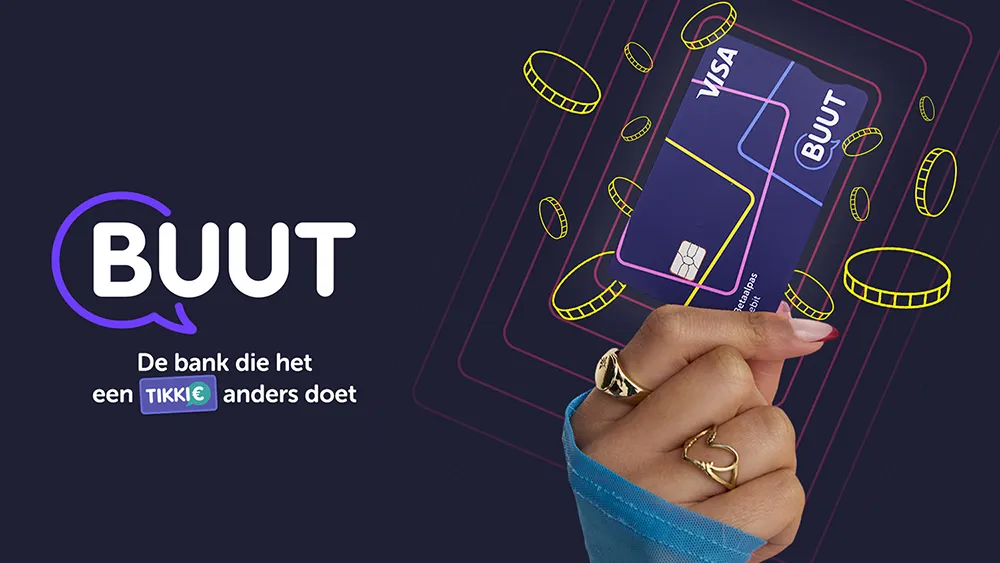
ABN AMRO launches a bank for kids: Buut
The team at ABN AMRO that, back in 2016, introduced the now wildly popular peer-to-peer payment app Tikkie—a favorite among Dutch youth—has just unveiled something new: a full-fledged bank designed for children and teenagers (and their parents), with a fresh take on financial education.
The initiative isn’t simply about creating accounts for a promising future customer base. The main goal is to give this digital generation the tools to regain control over their money—especially since a large share of young people report feeling financially vulnerable or insecure, and many parents admit they struggle to pass on financial basics they haven’t fully mastered themselves.
The new offer, called Buut, includes all the classic features you’d expect. Parents sign up through a dedicated mobile app and can open an account for each child aged 10 to 16 in their care. These are real accounts with their own IBANs, covered by deposit insurance and paired with a payment card for which parents can set restrictions and spending limits.
The unique thing about Buut is how money has to be managed. Any funds received—whether pocket money from parents or reimbursements from friends via Tikkie—must be placed into a specific “pot” tied to a spending category (like outings, clothes, video games) or a savings goal. When making a purchase, the child selects which pot to use. If there’s not enough balance, the transaction won’t go through.
The educational logic is clear: this mechanism brings budgeting principles to life in a concrete, digital way—analogous to the old-fashioned method of putting cash in envelopes for specific purposes. Videos and articles are available within the app to help guide kids through how it all works.
The concept is promising, but it raises a couple of questions. First, the budgeting method may not be suitable for every age group. Younger children might benefit from a simplified version—like the one PNC Bank pioneered years ago. Second, there’s a risk that users will bypass the feature by creating just one pot unless they’re nudged to do otherwise.
ABN AMRO does offer a welcome bonus for kids whose parents set up recurring pocket money transfers, but another idea might be to introduce a reward system—however symbolic—based on how effectively the pots are used. The educational content could also be better integrated, surfacing naturally at key moments when kids allocate funds or make spending decisions.
BNY goes all-in on financial education
At first glance, a financial institution like BNY—whose business is largely focused on serving clients within the industry—might not be the first name you’d associate with developing a financial education strategy. Yet the company is addressing the issue from multiple angles, because its leaders understand the stakes involved at various levels.
BNY’s commitment is clear: in a single press release, despite financial education not being a core part of its main businesses, the company announced three distinct initiatives linked only by their shared focus on education. Their diverse targets reflect the breadth of the approach: small community banks in the US, BNY’s own employees, and the general public (albeit indirectly).
For community banks, BNY offers sessions featuring presentations from its executives to help them tackle the challenges of the digital age—such as cybersecurity risks and opportunities for leveraging data analytics and AI—as well as more operational themes like financial management and strategic planning, areas often overlooked by smaller, locally focused institutions.
The employee-focused program, now entering a broader rollout, takes a very different direction. It’s designed to equip staff—and their families—with essential skills for sound personal financial management. This comes in the form of a curated mix of online learning modules and interactive sessions aimed at providing practical know-how for handling everyday money matters.
The third initiative is less innovative but still part of the picture: BNY has pledged a substantial US$10 million contribution to nonprofits working to improve financial well-being—particularly among vulnerable populations—by providing training and guidance to help households gain autonomy and better access to banking services.
Aside from this last element, which leans more toward image-building (unless it signals an eventual move into new business areas), BNY’s actions can be read as a recognition that a financial giant can only thrive if its ecosystem—starting with clients and employees—is on solid ground: for the former, in navigating their environment, and for the latter, in managing their wallets. Odd as the approach may seem, it stands as an example worth following across the sector—and perhaps beyond.
Citi and AI in private banking
Artificial intelligence is making its way into every corner of the financial industry—but it’s far less talked about in private banking. Citi Wealth is an exception: the wealth management arm of Citigroup has just introduced two new services, which it claims will “revolutionize” communication quality with clients.
Realistically, in a sector where most institutions hesitate to deploy AI tools directly with clients, the highly sensitive world of wealth management—hyper-conscious of reputation and far less accustomed to digital interactions—isn’t about to take risks. Unsurprisingly, Citi’s new platforms are aimed not at clients themselves, but at advisors and intermediaries.
The first, called Advisor Insights, is currently in pilot phase in North America, with broader rollout planned through 2026. It’s designed to give staff a dashboard with timely insights on market events and global news, along with their potential impact on portfolios. Human advisors then use this information to deliver tailored alerts and content to their clients.
The second, Ask Wealth, is already available to all employees. It’s a conversational agent that taps into Citi’s full body of research and documentation to answer questions—especially around market analysis. Like most chatbots, the goal is to help advisors provide clients with faster, more accurate information.
Nothing particularly groundbreaking here. In fact, one might wonder if AI is even needed to achieve these outcomes. The bigger question, especially for Ask Wealth, is: why not put this tool directly into the hands of clients? Is it fear of occasional errors, or is the AI itself too limited to be trusted without human filtering?
I often voice skepticism about Bank of America’s Erica, but at least their virtual assistant is in the hands of consumers, who do find some value in it. By contrast, Citi’s approach—understandable given its more sensitive, high-end clientele—falls short of its bold promise to deliver higher-quality service. Instead of strengthening a weak digital relationship with clients, these tools seem primarily designed to boost staff productivity.
Apate AI and CommBank: a new weapon against scammers
Remember Daisy, the virtual grandmother recruited by telecom operator O2 to waste scammers’ time? Building on the same idea, Australian fintech Apate AI offers businesses chatbots designed to gather real-time intelligence on the latest scams.
The startup’s founder, a seasoned cybersecurity expert, explained in an interview with Info Bank Security how the idea first came to him. During a family dinner interrupted by a scam call, he decided to play along with the caller—pretending to be the perfect victim—to entertain his kids. Forty-four minutes later, he realized that scaling this strategy through automation could prove highly valuable.
Powered by AI, Apate’s bots work both by voice and text. They can assume over 88,000 different personas, each realistic and culturally adapted (down to accent, humor, and local vocabulary), to convincingly fool scammers into thinking they’re interacting with a unique, real person—not a simulation.
One obvious goal is to trap fraudsters in endless conversations, keeping them too busy to harm real people. But the company goes further—since that model alone would be hard to monetize. Its system continuously analyzes the content of those exchanges, extracting valuable intelligence on fraud tactics, compromised accounts, impersonated brands, and more—insights its clients can use.
In its home market, Apate has already attracted the Commonwealth Bank of Australia (CommBank), which taps into its data streams to strengthen defenses—such as improving fraud-detection systems that flag suspicious payment patterns—and ultimately offer better protection to customers. The value is significant: instead of waiting for victims to file detailed reports, banks get access to thousands of scam interactions daily, providing near-instant intelligence.
The startup also plans to offer tailored scenarios for individual companies, but its full potential lies in pooling insights across industries. Financial services, telecom, and public-sector organizations—given their exposure—stand to benefit most from such shared intelligence. In practice, the information collected by Apate’s bots could help all of them in their ongoing fight against fraud.
LCL supports the lives of entrepreneurs
It’s no longer surprising to see financial institutions expanding into services beyond their traditional scope, especially when it comes to offerings for professionals and small businesses. Still, LCL’s latest initiative stands out by also addressing challenges entrepreneurs face in their personal lives.
Around the world, many banks searching for new revenue streams have built platforms—either in-house or through partnerships—to help businesses manage their daily operations. Extra-financial tools for accounting, invoicing, HR, payroll, and marketing are becoming standard, fueling intense competition.
With “Care Entrepreneurs,” Crédit Agricole’s subsidiary is taking a different tack. While still part of the industry’s broader diversification trend, its approach is distinctive: instead of piling on yet another set of “administrative” tools (already abundant on the market), LCL aims to ease some of entrepreneurs’ specific pain points.
Developed entirely in collaboration with specialists, the offer currently includes three components. The most conventional is privileged access to coworking spaces adapted for a variety of needs, such as meetings, training, and conferences. More innovative is a technology acceleration track, with educational programs and secure environments for developing and testing projects.
But what really sets Care Entrepreneurs apart is its recognition of the personal side of running a small business. One module focuses on supporting entrepreneurs raising young children, since they often lack the flexibility afforded to parents who are salaried workers. Through a partnership with Babilou, LCL offers them favorable access to daycare slots, plus emergency childcare and vacation coverage options.
LCL’s announcement doesn’t make it clear whether these services will be integrated into its banking apps or simply offered through external agreements requiring customers to reach out directly to partners. Nor is it clear whether the initiative is a first step toward a broader ecosystem of services or a one-off program.
As always, questions remain about the relevance—and therefore attractiveness—of non-financial services offered by a bank. Much will depend on how the services are delivered and whether pricing incentives (or free access) are included. Even so, LCL’s chosen direction has the merit of differentiation, stepping into a space where entrepreneurs often feel unsupported and sometimes overwhelmed.

Stay ahead with the latest innovations in financial services - Read more Financial Innovation Spotlights
Digital Reinvention community
With Qorus memberships, you gain access to exclusive innovation best practices and tailored matchmaking opportunities with executives who share your challenges.