Rooted in purpose: How Şekerbank is digitally empowering Turkey’s real economy
As Group Head of Digital Banking at Şekerbank, Deniz Kara leads the bank’s mission to merge technology with purpose. Şekerbank’s Agrifuture project—honored with a global award at the 2025 Qorus-Infosys Finacle Banking Innovation Awards—exemplifies how digital ecosystems can empower farmers and SMEs while promoting sustainability. Kara explains how the bank continues to innovate at the intersection of finance, data, and environmental responsibility.

As Group Head of Digital Banking at Şekerbank, Deniz Kara leads the bank’s mission to merge technology with purpose. Şekerbank’s Agrifuture project—honored with a global award at the 2025 Qorus-Infosys Finacle Banking Innovation Awards—exemplifies how digital ecosystems can empower farmers and SMEs while promoting sustainability. Kara explains how the bank continues to innovate at the intersection of finance, data, and environmental responsibility.
Can you introduce yourself and also give a brief overview of Sekerbank for those who may not be familiar with banks in Turkey?
I’m Deniz Kara, Group Head of Digital Banking at Şekerbank. Founded in 1953 by thousands of sugar beet farmers as a cooperative bank, Şekerbank was built on the mission of supporting rural development and empowering local producers. For more than seven decades, we have remained true to that origin—serving as a bridge between communities and finance.
Today, our customer focus still reflects these roots: we work hand in hand with farmers, artisans, and SMEs across Anatolia, helping them grow their businesses and adapt to a changing world. In doing so, we act under our guiding principle of being “Turkey’s Social and Environmental Bank.” This philosophy drives every product we design and every partnership we build.
Our recent initiatives clearly reflect this purpose. Digital onboarding for individuals, farmers, and sole proprietors; quick digital loan solutions; Carbonmap, Agrifuture, and Buy Now Pay Later (BNPL) for farmers are just a few examples of our work.
These initiatives demonstrate that our innovation agenda is not just about technology, but about creating real social and environmental value—staying true to our founding promise while preparing our communities for a more sustainable future.
Can you tell us about this innovation? What makes it unique? And what's coming next for Agrifuture?
Agrifuture is the evolution of our pilot initiative with Farmolog (a startup serving agro-businesses) and a leading farmer cooperative. We digitized the entire production cycle—from soil preparation to harvest—tracking fertilizers, water, and energy use through a shared web platform. This allows both farmers and the bank to validate sustainability data and translate it into tangible financial advantages while allowing companies and farmers to trace production phases digitally.
AgriFuture stands out because it brings together the bank, agri-tech providers, and cooperatives to create a single ecosystem that rewards responsible production. In 2025, it was recognized globally with the third place in the Social, Sustainable & Responsible Banking Innovation category at the Qorus-Infosys Finacle Banking Innovation Awards 2025, highlighting its impact on sustainable finance.
Our next step is to expand coverage to more crops and regions, enhance the analytics layer with AI insights, and connect the system directly with tailored credit and input marketplaces.
This innovation could serve as an example for many banks. What’s the most important thing you would tell someone considering embarking on a similar project?
Select one region and one committed producer group, and co-design the solution with agronomists and farmers. Tie the digital outputs directly to real decisions like fertilizer optimization, carbon emission calculation, or access to finance. A working, data-producing prototype builds trust far more effectively than any presentation.
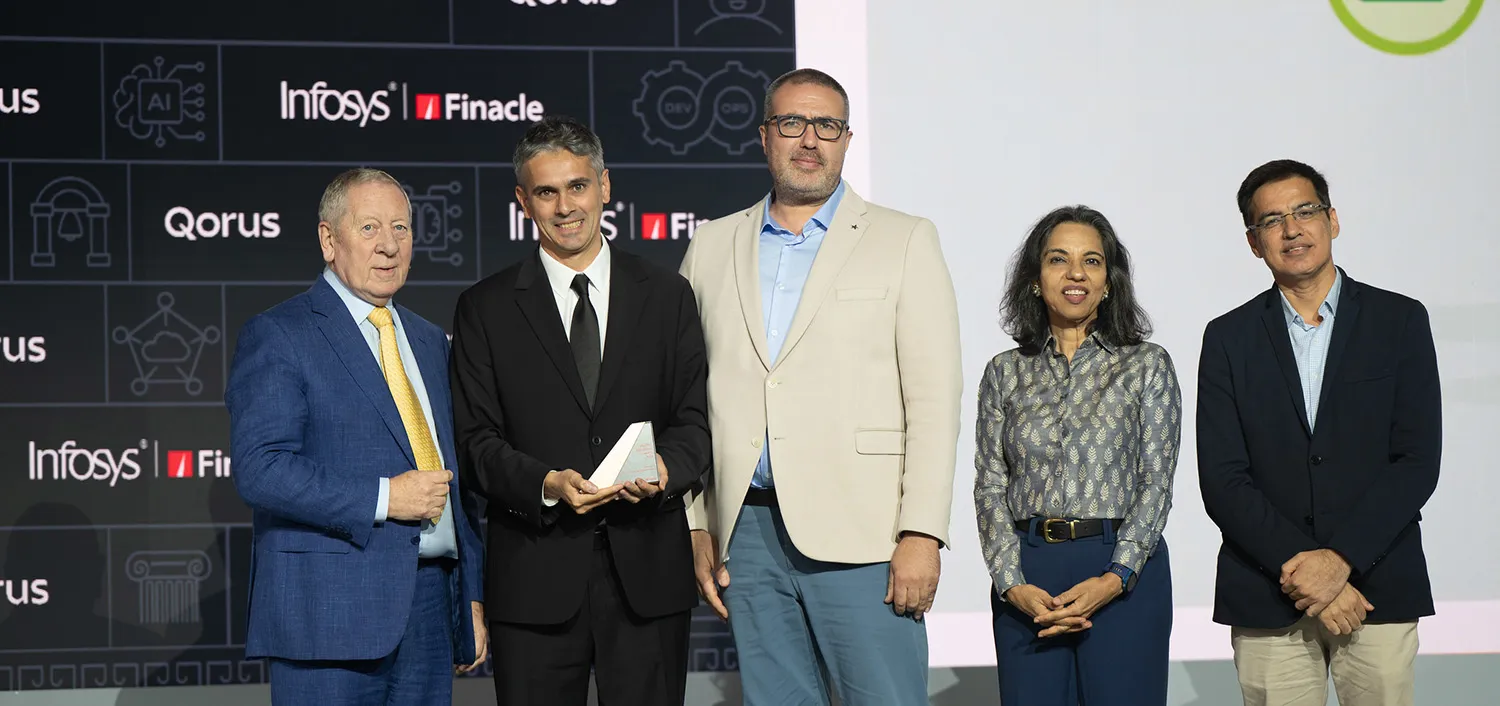
What does this award mean to you and your innovation team?
The recognition confirms that innovation by a social and environmental benefit-oriented institution like Şekerbank can lead meaningful transformation when technology and purpose align. This award validates our belief that social and environmental impact can coexist with financial innovation—and that sustainability can be widespread through accessible digital tools.
The award belongs equally to our digital and agri teams, to our sustainability experts, and most importantly, to the farmers and food companies who trusted us with their data and ideas. They are not just beneficiaries, but co-creators of this change.
This acknowledgment encourages us to keep pushing boundaries—integrating AI, open banking, and sustainability intelligence—to make responsible banking not just a slogan, but a living, measurable ecosystem.
How do you tailor products or services to meet the needs of small farmers, artisans, or local entrepreneurs?
Our approach to product design begins with understanding the daily realities of small farmers, artisans, and local entrepreneurs—people who often live far from branches and depend on seasonal income. We build modular digital solutions around their real needs rather than around standard banking templates.
Digital Onboarding for Farmers enables remote onboarding through Şeker Mobil by verifying agricultural data directly from the Farmer Registry System (ÇKS). Once verified, they can instantly access segment-specific products such as Hasat Kart, whose repayment cycles are synchronized with harvest seasons. Farmers can also receive instant short-form loan offers (“Kısa Teklif”) and complete the entire credit journey digitally—without a single branch visit.
At the same time, our “BNPL for farmers” infrastructure connects farmers to finance right where production begins. When shopping for agricultural inputs at partner dealers, non-customers can apply for an agricultural purchase loan, become a customer instantly through UME Tarım, and use their approved limit directly on the dealer’s screen.
One of the most critical aspects of banking for farmers, artisans, and small businesses is accessing the right amount of financing—neither more nor less—through accurate financial calculations. Considering that technology goes far beyond what customers see on the front end, our true differentiation lies in precisely determining the “adequate and necessary” financing limit for each customer’s unique situation.
For SMEs and local producers, our digital ecosystem expands beyond financing. Through Carbonmap, Turkey’s first sustainability management platform built by a bank, small businesses can measure their carbon and water footprints, calculate ESG scores, and access green financing opportunities—all free of charge and fully integrated with Şekerbank’s loan allocation system.
Together, these solutions reflect Şekerbank’s inclusive design philosophy: blending financial access, sustainability, and digital simplicity to make banking truly work for communities that build the country’s real economy.
Everyone seems focused on AI and data analysis these days. Could you share how Şekerbank is using AI and highlight some of the innovative projects you have launched, whether for your clients or your staff?
AI supports both our customers and employees.
For customers, our flagship sustainability platform Carbonmap includes “Carby”, an AI-driven sustainability assistant that translates complex carbon data and EU regulations into simple, actionable insights. Carby helps SMEs understand their environmental performance, generate ESG scores, and prepare for green-transition financing. In 2025, Carbonmap was recognized with the silver SME Banking Impact Award by Qorus Global, a testament to its impact on sustainable SME transformation.
Internally, we apply AI to boost efficiency and decision support across the bank. Since our corporate data cannot be moved to external cloud environments, we built an in-house AI model trained on Şekerbank’s entire repository of regulations, circulars, and internal announcements. This assistant analyzes the content of those documents and responds to employees’ queries instantly with accurate, context-specific answers—transforming how our teams access and use institutional knowledge in real time.
In software development processes, we also employ AI to match UI/UX guidelines and API requirements with ready-to-use components, producing design-consistent screens automatically. This shortens delivery cycles, improves compliance with design systems, and supports rapid prototyping within digital product teams.
Many banks are focusing on digital-first strategies. How does Şekerbank ensure that technology enhances—not erodes—its community focus?
We embrace technology as an enabler, not a substitute for relationships. Şekerbank’s strategy is digital-first but community-driven. Our branches remain active in rural and semi-urban regions, while open banking and NFC-based authentication minimize friction for customers. Even our voice response and contact center systems are AI-augmented to ensure empathy and context are never lost.
What is your vision for banking in 2030?
By 2030, banking will no longer be a standalone service—it will exist as an intelligent layer seamlessly embedded in the everyday ecosystems of people and businesses. We envision a landscape built around three main pillars: trusted data infrastructure, embedded financial insight, and community-driven platforms where finance, suppliers, and sustainability interact effortlessly.
Fintech partnerships and API-driven collaborations will redefine distribution. Traditional banking channels will evolve into open, interoperable networks where startups, cooperatives, and even non-financial platforms co-create value. Şekerbank’s current journey through open banking, Carbonmap, Agrifuture, and BNPL for farmers already reflects this direction—enabling finance to be integrated where it creates the most impact, rather than waiting for customers to come to the bank.
At the same time, embedded finance will be deeply human-centered. Digital ecosystems will not only facilitate payments or lending, but also provide sustainability advice, risk analytics, and community knowledge sharing. Imagine an agricultural platform where climate data, soil health, and carbon scoring automatically guide both farm management and credit decisions—this is where we are heading.
By 2030, banking will be modular, collaborative, and purpose-led. The role of banks will shift from being transaction enablers to data trustees and ecosystem orchestrators, ensuring that customers’ data, sustainability goals, and financial wellbeing evolve together—responsibly, transparently, and inclusively.
Innovation Awards Hub community
With Qorus memberships, you gain access to exclusive innovation best practices and tailored matchmaking opportunities with executives who share your challenges.