Putting emotional health first: MAPFRE’s award-winning digital health initiative
Pedro Díaz Yuste, CEO of Savia and Digital Health Director at MAPFRE Spain, shares how the company is using digital innovation to make emotional health support more accessible, personalized, and human-centered.

Pedro Díaz Yuste, CEO of Savia and Digital Health Director at MAPFRE Spain, shares how the company is using digital innovation to make emotional health support more accessible, personalized, and human-centered.
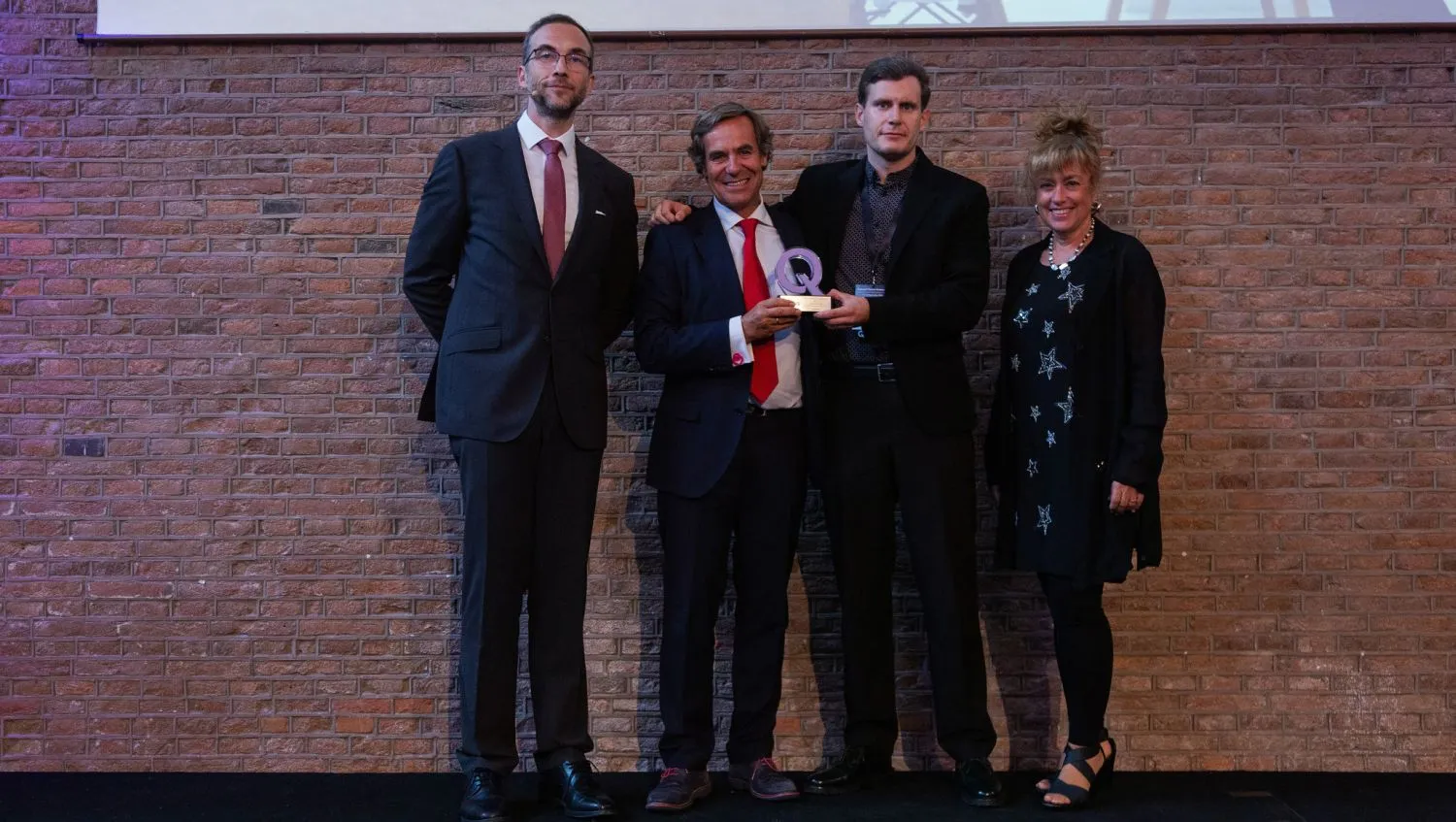
MAPFRE’s Emotional Well-being initiative won an award in the Product & Service Innovation category at the Qorus Innovation in Insurance Awards 2026.
Can you introduce yourself and tell us more about your role at MAPFRE?
I’m Pedro Díaz Yuste, CEO of Savia and Digital Health Director at MAPFRE Spain. My role sits at the intersection of healthcare, technology, and business, with a clear objective: to explore how digital capabilities can help us make healthcare more accessible, personalized, and relevant to people’s everyday lives.
At MAPFRE, we believe that digital health is not simply about introducing new technologies or digitizing existing services. It is about rethinking the healthcare experience around people and giving them easier access to the right support at the right time. Technology allows us to create more flexible and personalized models of care, but the human dimension and the trust between the person and the healthcare professional remain essential.
For me, that is where digital health becomes truly powerful: when technology helps us make healthcare more accessible without losing the human connection that is at the heart of care.
What made you most proud of Emotional Well-being?
What makes me most proud is that we have been able to turn innovation into something tangible and useful for people.
Mental and emotional health are increasingly important parts of our overall well-being, but taking the first step toward seeking help is not always easy. With Emotional Well-being, we wanted to create an experience that could accompany people from those early stages, helping them understand their needs, providing them with self-care resources, and giving them access to professional support when necessary. The aim was not only to provide therapy, but to create a more complete and accessible journey around emotional health.
The results of the pilot reinforced our belief that this approach makes sense. During the six-month pilot, more than 1,200 people participated. We achieved an 80% adoption rate in the clinical onboarding and specialist assignment process, along with an overall satisfaction score of 8.9 out of 10.
Those figures are important because innovation also needs to demonstrate an impact. But what I find particularly valuable is the model behind them. We have shown that digital convenience and human care do not have to be competing ideas. Technology can help us improve accessibility and personalization while healthcare professionals continue to provide the expertise, empathy, and support that people need.
What’s the most important thing you would tell someone considering embarking on a similar project?
My main recommendation would be very simple: start with the problem, not with the technology.
It can be tempting, particularly today with the rapid development of AI and digital health technologies, to begin with a technological capability and then look for ways to apply it. I think the most successful innovation happens in the opposite direction. First, you need to understand the problem you are trying to solve, the people affected by it, and the barriers that prevent existing solutions from fully addressing their needs.
That was particularly important with Emotional Well-being. In mental health, people may experience uncertainty about when they should seek help, how therapy works, or which type of support is right for them. Our work on the project identified this lack of understanding as one of the challenges to adoption and highlighted the importance of creating a very human onboarding experience.
You also need to listen and learn as you go. The pilot allowed us to understand how users responded to different forms of support and where we needed to improve the experience.
Technology and AI can be extremely powerful enablers. They can help us create more personalized and scalable experiences. But ultimately, especially when we are talking about health, technology must be adapted to people, not the other way around. Keeping that principle in mind helps ensure that innovation delivers genuine value rather than simply adding another layer of technology.
What’s coming next for Emotional Well-being?
The next step is to build on everything we have learned and continue evolving the proposition, along with other ideas and projects, around the real needs of our customers.
One of the greatest benefits of launching a project like this is that you begin to understand much better how people want to interact with digital health services. Emotional health is not a single, linear journey, so we believe it is important to offer different forms of support and allow the experience to adapt to each person.
The pilot has already provided some very interesting insights. Written therapy, for example, achieved a user rating of 4.2 out of 5 and was particularly valued for the continuous support it provides and its ability to encourage personal reflection and self-awareness.
Those learnings give us a valuable foundation from which to continue improving our digital health experience.
What would you say to companies that might consider entering the 2027 Qorus Innovation in Insurance Awards?
I would absolutely encourage them to participate.
The Qorus Innovation in Insurance Awards provide an opportunity not only to showcase successful projects, but also to step back from the day-to-day work and reflect on what innovation is actually delivering. For any organization working in innovation, I think that exercise is extremely valuable.
When preparing a project for this kind of international recognition, you have to articulate the problem you wanted to solve very clearly, what makes your approach different, what you have learned, and, crucially, what measurable impact you have achieved. In our case, the results of Emotional Well-being, including adoption, satisfaction, and NPS, provided concrete evidence of how users responded to the proposition.
It is also valuable because it exposes you to what other companies around the world are doing and to different approaches to common challenges within the insurance industry.
My advice to companies considering entering would be: don’t necessarily enter with the project that sounds the most innovative. Enter with the project that creates the most meaningful impact. Innovation should ultimately be judged by the value it creates for customers, for the business, and for society.
What does this award mean to you and your innovation team?
First of all, it is a recognition of a collective effort. Projects like Emotional Well-being only become possible when different areas and different types of expertise work together around a common objective.
The initiative brought together 18 people from MAPFRE across several areas, including technology, commercial business development, innovation, data, digital health, and medical management, as well as six professionals from the provider we worked with. That multidisciplinary approach was especially important because we were addressing a complex challenge in which technology, healthcare expertise, user experience, and business all had to work together.
Receiving international recognition from Qorus confirms that the direction we have taken is relevant beyond MAPFRE itself. But I think the greatest value of the award is the motivation it gives the team to continue challenging ourselves and exploring new ways to improve healthcare experiences.
It also reinforces something we strongly believe: innovation only matters when it improves people’s lives. In Emotional Well-being, technology is not the final goal. It is the means that allows us to make emotional care more accessible, flexible, and personalized while maintaining professional and human support.
That is why this award makes us especially proud. It recognizes the innovation behind the project, but, more importantly, it recognizes an initiative designed around a very real need in people’s lives.
Innovation Awards Hub community
With Qorus memberships, you gain access to exclusive innovation best practices and tailored matchmaking opportunities with executives who share your challenges.