Innovation Spotlight: How banks are accelerating home energy upgrades
In this article, Patrice Bernard highlights how banks are stepping in with innovative solutions to make the process easier and more affordable.

Home energy upgrades are becoming a priority for homeowners worldwide, but navigating costs, grants, and logistics can be daunting. In this article, Patrice Bernard, Trends Decoder & Innovation Catalyst and author of the French blog C’est pas mon idée, known for his frank and outspoken style, highlights how banks are stepping in with innovative solutions to make the process easier and more affordable.
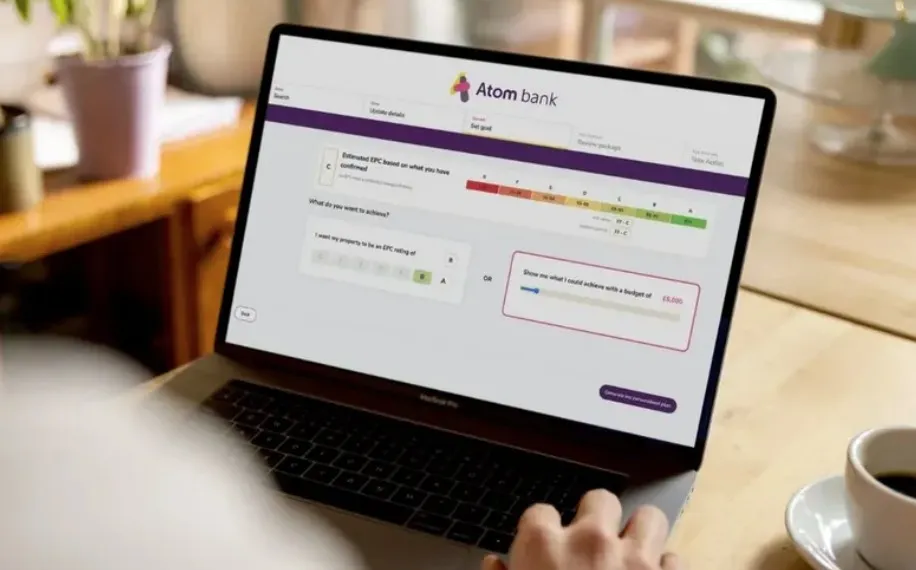
In the UK, Atom Bank’s Retrofit Explorer helps homeowners assess their property and create personalized improvement plans. In the Netherlands, ABN AMRO’s Beter Wonen program coordinates planning, execution, and financing to ensure energy-efficient renovations don’t impact budgets. Meanwhile, in France, Sofinco finances eligible MaPrimeRénov’ projects, bridging the gap between public subsidies and upfront costs for homeowners and contractors alike.
Atom Bank offers energy efficiency assistant for homeowners
Around the world, governments are encouraging citizens to prioritize energy efficiency in their homes—but the programs designed to help are often complex and confusing. To bridge the gap, UK-based Atom Bank introduced a new tool for homeowners in January 2025.
Since 2007, the UK has used a building rating system to quickly assess environmental performance, helping owners identify improvement opportunities that can cut costs and boost resale value. Yet Atom’s research shows more than half of Britons don’t know their home’s rating, and six in ten struggle to understand how the system works.
Despite this, 68% recognize the value of energy upgrades—both for lowering heating bills (by nearly 30% when moving from a D to a C rating) and increasing resale value. But many dramatically overestimate the costs: while most expect to spend over £25,000, small improvements starting at £1,500 can sometimes make a real difference.
To tackle this information gap and simplify the first step, Atom launched Retrofit Explorer. Open to all users, the app begins with a quick diagnostic, relying on publicly available data to minimize manual input. It then generates a personalized improvement plan, tailored to a user-specified budget.
Finally, the platform addresses one of the biggest obstacles to action: finding the right contractors. It provides names and contacts for firms capable of completing the suggested upgrades, with options to filter for local providers or those that can handle the entire project.
While this tool may have only a marginal impact on Atom’s core mortgage business, it reflects the bank’s broader commitment to responsible operations. For a bank with a wider scope—covering savings, mortgages, and business lending—offering financing for energy upgrades could be a natural next step.
For Atom, the priority is clear: supporting customers in their financial and practical concerns, not just selling products.
ABN AMRO’s integrated solution for budget-neutral renovations
Like many homeowners worldwide, most Dutch property owners want to improve the energy performance of their homes—but the cost of renovations often stands in the way. Since January 2026, ABN AMRO is addressing this challenge by offering mortgage clients a comprehensive solution, promising energy upgrades without affecting their budgets.
Admittedly, the official communications paint a limited picture of how this offer actually works. Still, the approach and concept provide inspiration for banks genuinely committed to sustainability and to supporting clients in practical ways, both in improving energy efficiency and optimizing financial and personal well-being.
In practice, the Beter Wonen (“Better Living”) program combines all the components necessary to carry out home renovation projects. Through partnerships with specialized service providers, clients get a single point of contact at ABN AMRO for planning, executing, and monitoring projects, identifying applicable grants and subsidies, completing all required paperwork, and arranging financing.
The goal is to guide homeowners through projects such as improving insulation, upgrading heating systems, or installing solar panels, creating a plan that—once all factors are considered—remains budget-neutral or even beneficial. The formula isn’t magical; it balances costs with expected energy savings, though naturally it works for only part of the target population.
The primary audience for Beter Wonen is owners of older, poorly insulated homes, for whom the program offers an easy way to reduce their environmental footprint and, as a side benefit, increase property value. First-time buyers can also benefit, taking advantage of low-cost homes with poor energy performance that can be upgraded.
Beyond its practical, extra-banking approach—which continues to interest institutions looking to diversify—ABN AMRO’s initiative is exemplary for its fundamentally client-focused logic. Instead of applying arbitrary formulas to income, the program evaluates projects based on clients’ actual disposable income, shifting the priority toward their peace of mind.
Sofinco finances MaPrimeRénov’ to make home renovations accessible
In November 2025, following an agreement with the French housing agency (ANAH), Sofinco (Crédit Agricole Personal Finance & Mobility) became the first institution officially authorized to finance MaPrimeRénov’, the government’s public aid program for home energy renovations—a program without which many French homeowners would forgo essential improvements.
Part of France’s broader strategy to reduce greenhouse gas emissions, financial support for energy upgrades has been critical for years, especially for owners of inadequately insulated “energy-poor” homes. For lower-income households with often old and dilapidated properties, the subsidy is a lifeline—but accessing it has long been fraught with challenges.
Even ignoring the uncertainties caused by government decisions (which led to a temporary suspension of the program in summer 2025), a major limitation of MaPrimeRénov’ is its reimbursement model. Homeowners are typically required to advance the full cost of renovations, creating a significant barrier. Companies often address this by deducting the subsidy from their fees, receiving payment from the agency afterward.
The problem with this setup, which affects all beneficiaries, is the long delay in payment. Even after the subsidy is approved, disbursement by the agency can take months, creating cash flow problems for contractors who cover the upfront costs. Small businesses and independent artisans often cannot absorb this risk and lose clients, while larger companies sometimes put their financial viability at risk.
This is where Sofinco steps in. The institution finances all eligible projects (after verification) carried out by RGE-certified contractors (“Recognized as an Environmental Guarantor”), whether or not they are official partners of Sofinco. Partner contractors can also offer clients payment plans for their portion of the costs. In practice, the subsidy is paid directly to Sofinco, allowing it to be deducted from client invoices without worrying about administrative delays.
Crédit Agricole's consumer credit subsidiary is thus assuming a role that home renovation companies should never have had to play. Yet this raises a critical question: who ultimately bears the cost of the service, since loans are never free? Will it be the contractors, who would effectively be taking on a form of factoring for a highly specific receivable? Or will ANAH compensate for its processing delays? In either case, it prompts a larger debate about whether it is appropriate to rely on a financial institution to cover the internal inefficiencies of a government agency.
ESG community
With Qorus memberships, you gain access to exclusive innovation best practices and tailored matchmaking opportunities with executives who share your challenges.